An evening in a beer garden
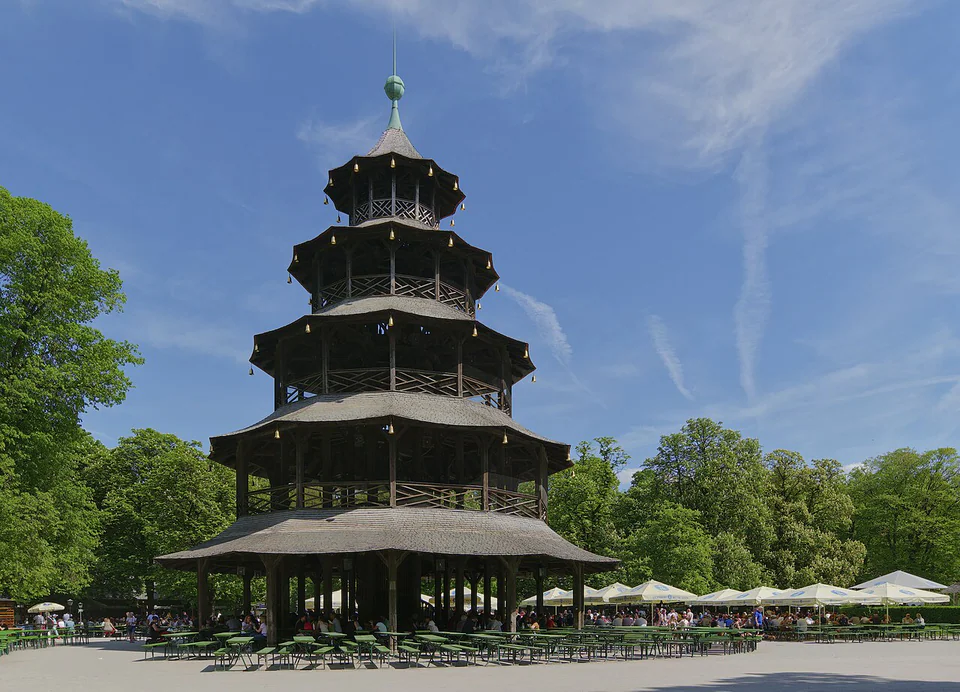
The beer garden at the Chinese Tower has around 7,000 seats and is the city's second largest after the Hirschgarten. Fetch a Mass and a pretzel from the self-service area, or bring your own picnic.
See tours and prices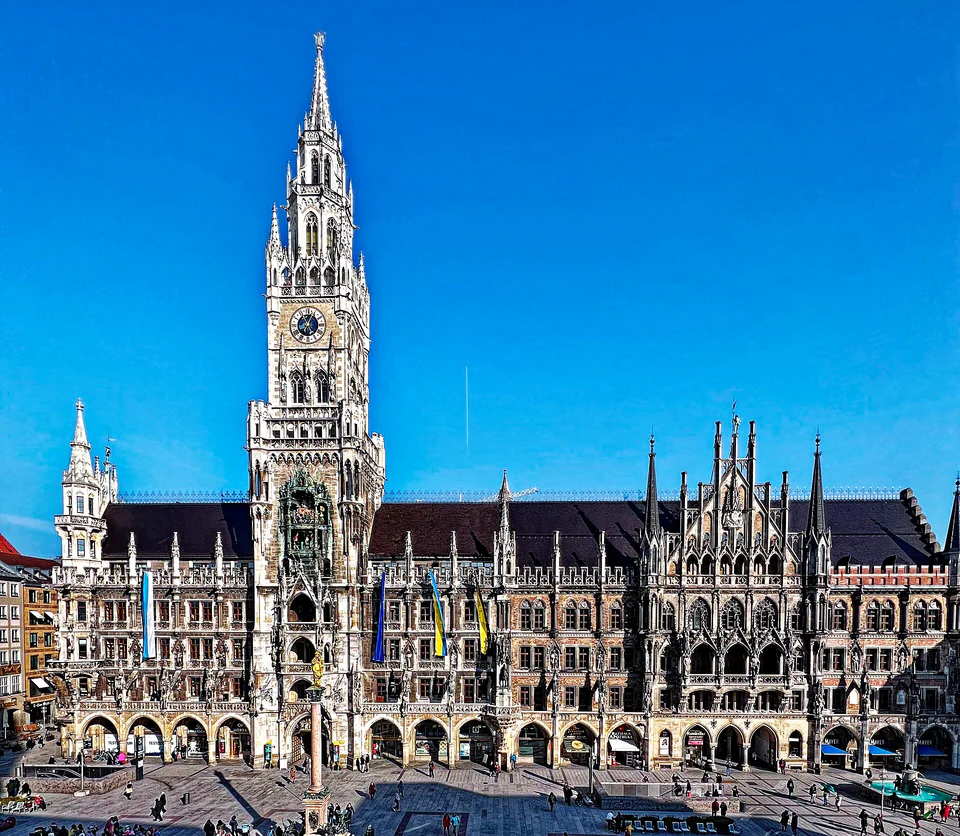
Bavaria's capital at the foot of the Alps · Germany
Your guide to Munich
Munich lies on the River Isar on the plain north of the Alps and is Germany's third-largest city. Founded in 1158, it was the seat of the House of Wittelsbach for more than 600 years, and the family ruled Bavaria until 1918. Dukes and kings left behind palaces, grand ceremonial avenues and valuable art collections. Today Munich is a prosperous city with a strong economy, a major business community and one of Europe's most successful football clubs.
The heart of the city is Marienplatz, where the neo-Gothic City Hall with its famous Glockenspiel towers over the square. Around it stand the Frauenkirche with its two copper-clad domes, the Viktualienmarkt food market and lively pedestrian streets. You can easily reach most of the centre on foot. Much of the old town was destroyed in the Second World War, but it was rebuilt with the aim of preserving the city's historic character.
Beer culture is a natural part of everyday life. In the beer gardens people sit at long tables under the chestnut trees with a Maß, a litre of beer. At traditional beer gardens, guests may bring their own food. Oktoberfest on the Theresienwiese draws millions of visitors over a little more than two weeks around the turn of September and October, and in Advent the city's squares fill with atmospheric Christmas markets.
Greenery is never far away. The Englischer Garten is one of the largest city parks in the world, and in summer locals swim and barbecue along the Isar. On clear days the Alps can be glimpsed on the horizon, and lakes, mountains and the fairy-tale castle of Neuschwanstein are all within reach on a day trip.
Things to do
The beer garden at the Chinese Tower has around 7,000 seats and is the city's second largest after the Hirschgarten. Fetch a Mass and a pretzel from the self-service area, or bring your own picnic.
See tours and prices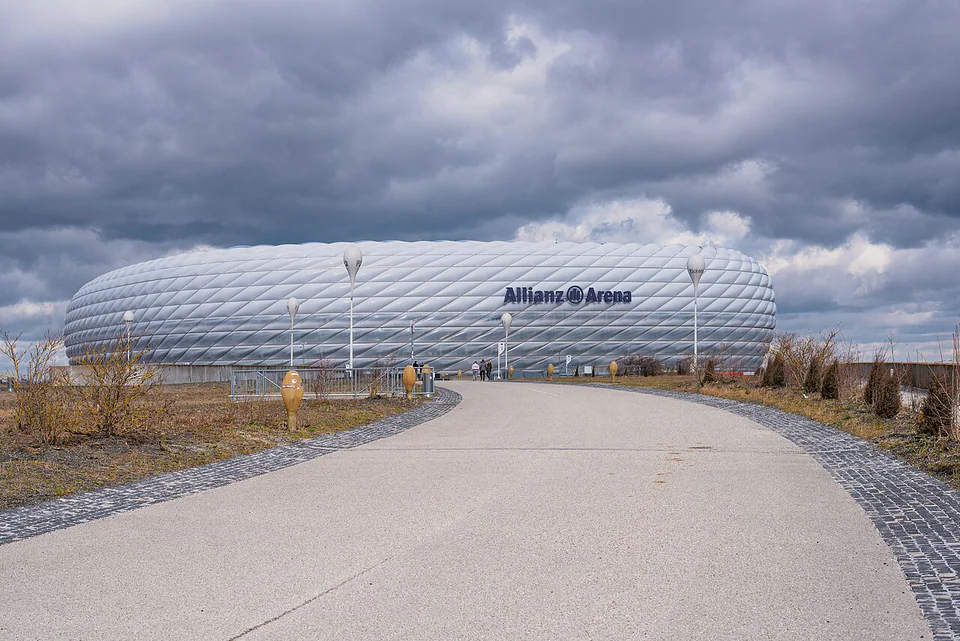
FC Bayern's stadium in Fröttmaning is reached on metro line U6. The stadium tour takes you to the dressing rooms and players' tunnel, and can be combined with the club's museum.
See tours and prices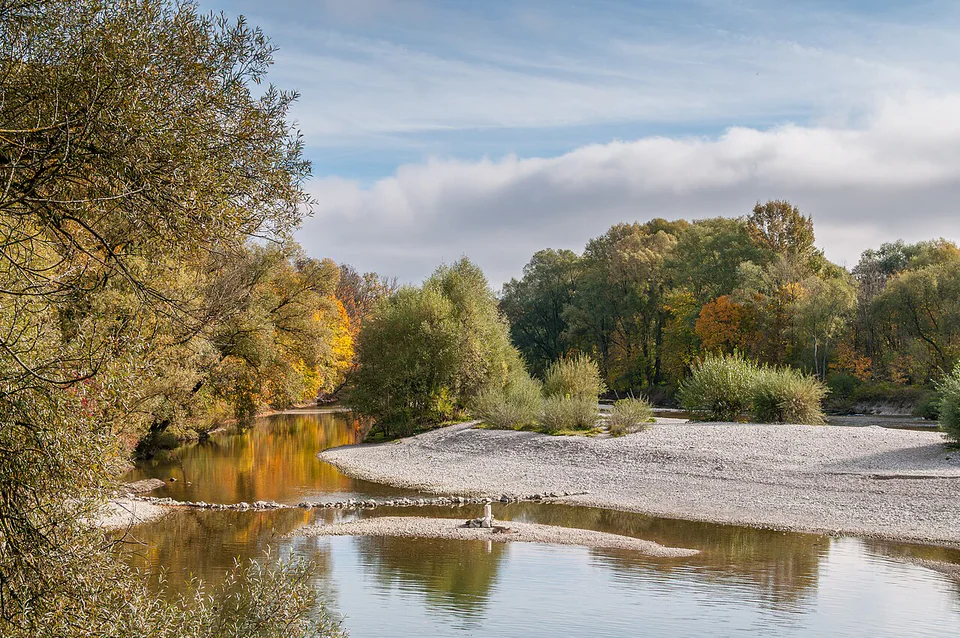
Cycle paths follow the river right through the city. South of the centre at the Flaucher, the gravel banks spread out, and in summer locals swim, sunbathe and barbecue there.
See tours and pricesPack right
Best May–September
−4–24 °CCold winters with frost and sometimes snow, and warm summers with afternoon thunderstorms. Advent draws visitors with Christmas markets, and September with Oktoberfest and often fine autumn weather.
Current currency
Euro
1 EUR to SEKThe rate is updated every hour. Always check the current rate before you travel.
Compare hotels and apartments on the map, with current prices.
The map loads from Stay22 only when you click. Stay22 may then set cookies and collect information about your browser. Privacy
Plan your trip
Munich Airport Franz Josef Strauss (MUC) lies just under 30 kilometres north-east of the centre. Lufthansa flies direct from Stockholm Arlanda (ARN) and Gothenburg Landvetter (GOT), and there are plenty of connections via Copenhagen and other European cities. The S1 and S8 suburban trains take you to the Hauptbahnhof central station in about 40 minutes, and the Lufthansa Express Bus gets there in roughly the same time. Some low-cost flights land at Memmingen (FMM), about 110 kilometres to the west, with buses to Munich taking a little over an hour.
If you'd rather go by train, you can take the night train from Stockholm to Hamburg or Berlin and continue on German high-speed trains to Munich.
Check current departures and prices before you travel.

Around the Hauptbahnhof there are many good-value hotels close to trains and the airport bus, though the area is less charming. The Old Town around Marienplatz is the most expensive but has everything around the corner.
Maxvorstadt and Schwabing, with museums, the university and cafés, suit you if you'd rather stay in a neighbourhood, and the Glockenbachviertel and Gärtnerplatz have restaurants and nightlife. Haidhausen, across the Isar, is quieter. During Oktoberfest and big trade fairs prices rise sharply, so book well ahead.
The big and the small
The festival on the Theresienwiese has been held since 1810, when Crown Prince Ludwig married Therese, and is often described as the largest of its kind in the world. For just over two weeks, from the second half of September to early October, six to seven million visitors come to the huge beer tents and fairground rides. Entry is free, but tables in the tents on evenings and weekends need booking well in advance. Some seating is always kept unreserved, and on weekdays before lunch you can usually find a place. Book accommodation early. Oktoberfest tours and table bookings
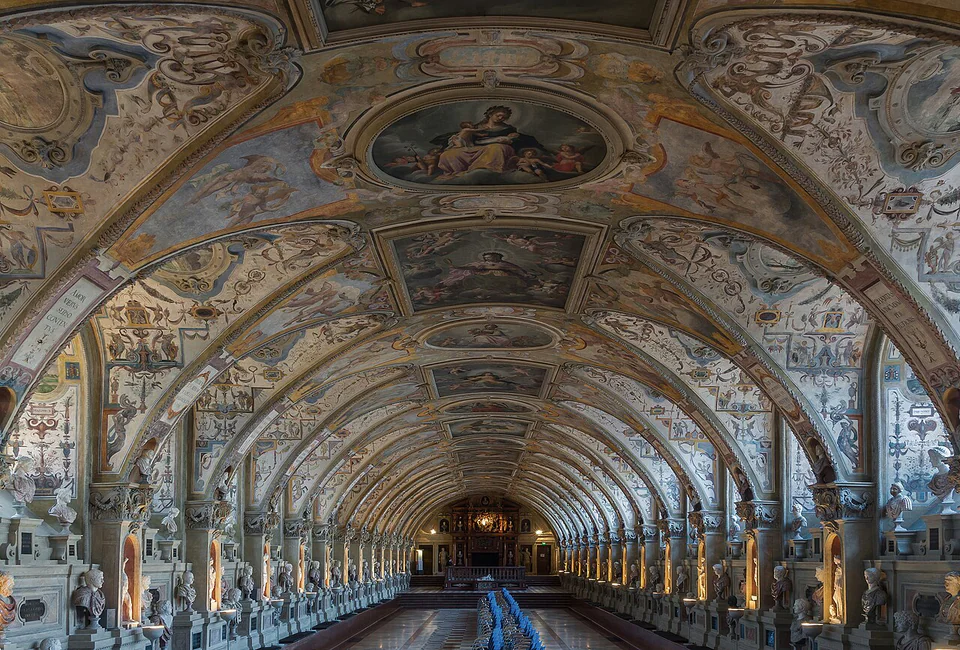
The Wittelsbachs' city palace in the centre was extended over four centuries and has more than a hundred rooms open to visitors. The highlight is the 16th-century Antiquarium, the largest Renaissance hall north of the Alps. The same complex holds the Treasury with crown jewels and the rococo Cuvilliés Theatre. Munich Residenz tickets
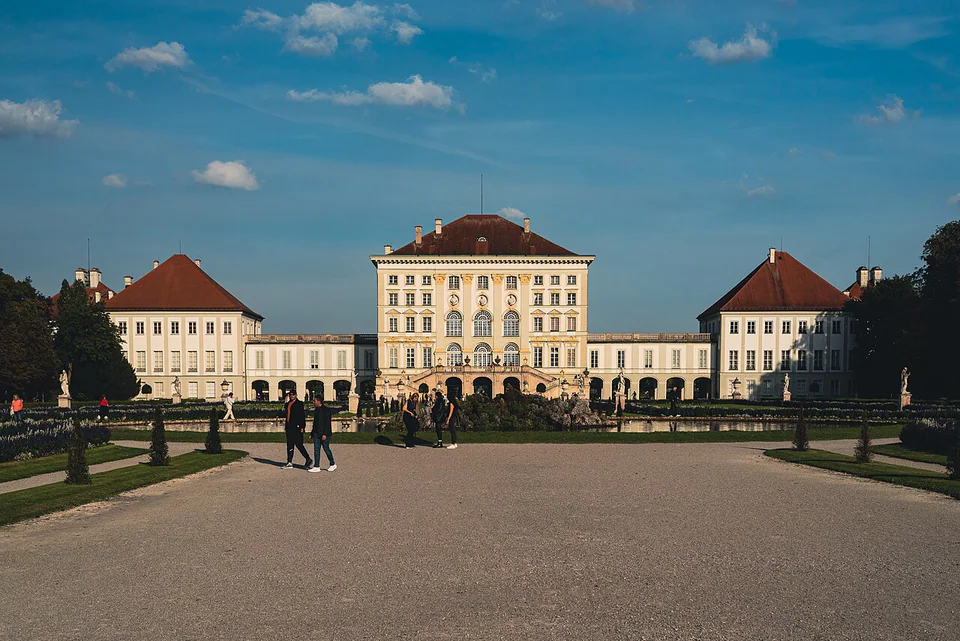
The summer palace west of the centre was begun in 1664 and later extended into a long Baroque façade with canals and a large park. Inside is Ludwig I's Gallery of Beauties, and the park holds small pavilions such as the rococo gem Amalienburg. The Marstallmuseum shows royal coaches and sleighs. The park is free to walk in. Nymphenburg Palace tickets
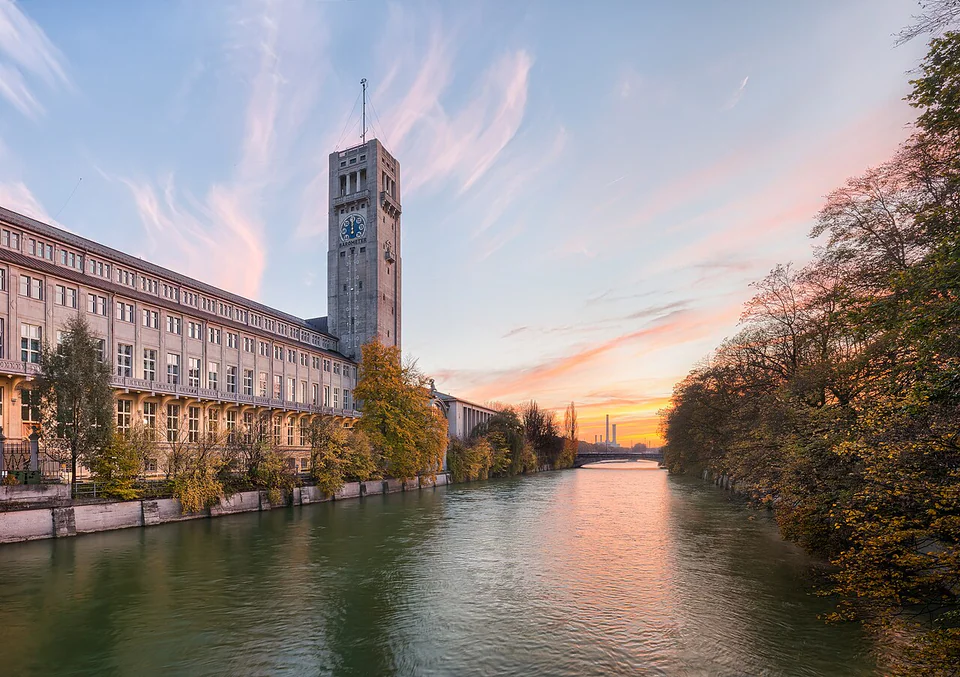
The museum on an island in the Isar was founded in 1903 and is one of the largest museums of science and technology in the world. It has aircraft, ships, mine tunnels and experiments to try yourself, and you won't see everything in a day. Pick out a few sections in advance. Deutsches Museum tickets
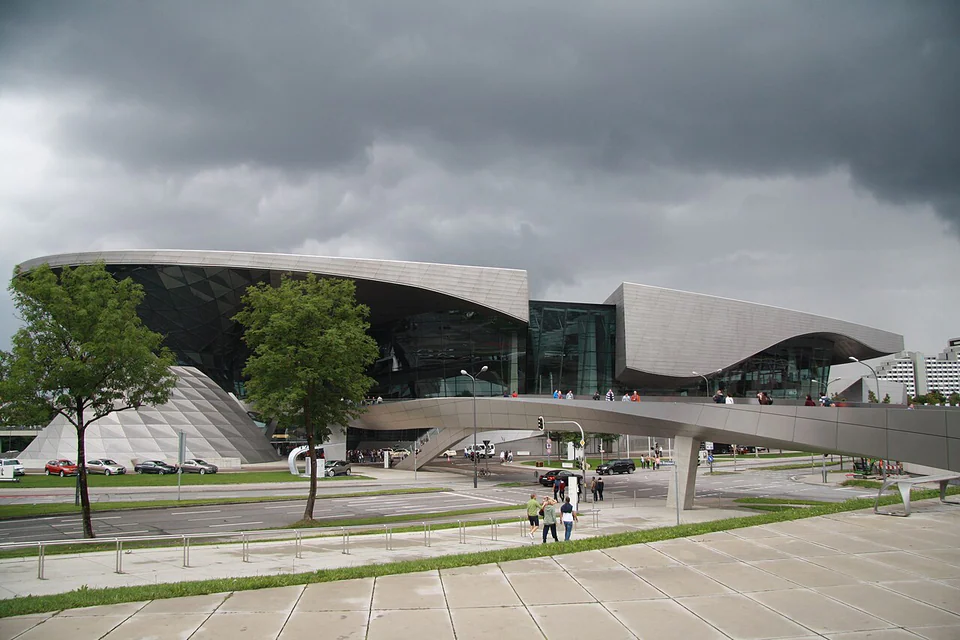
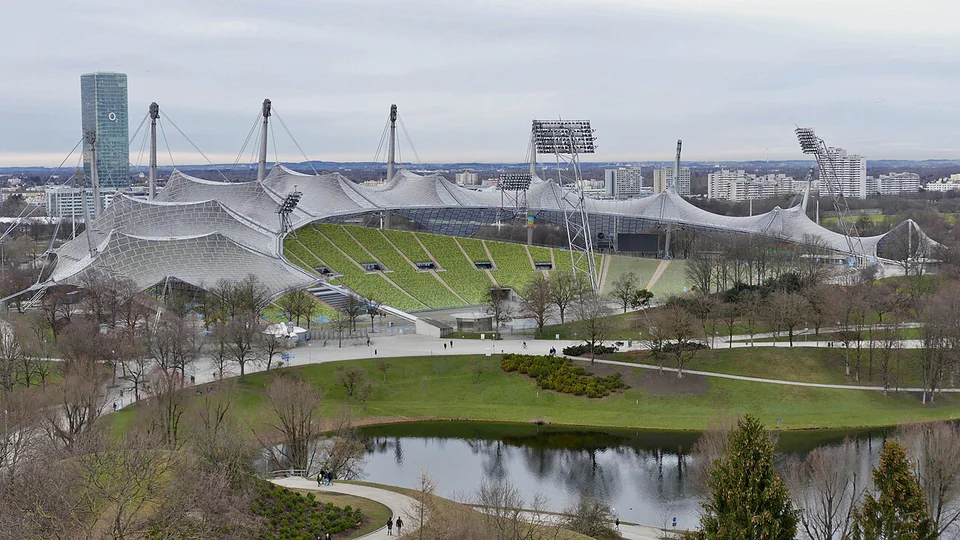
The park was built for the 1972 Olympics, and the tent-like acrylic glass roofs over its arenas are still a landmark. Walk up the grassy Olympiaberg hill for the view. Across the road is BMW Welt, a futuristic showroom that is free to visit, and the BMW Museum, with cars and motorcycles from a century of production. BMW Museum tickets and tours
In the town of Dachau, half an hour north-west of Munich, the Nazis opened one of their first concentration camps in March 1933. Some 200,000 people were imprisoned here and at least 41,000 died. Today the camp is a memorial site with exhibitions on its history. Entry is free, and guided tours give deeper context. Take the S2 suburban train to Dachau and then a bus. Guided visits to the Dachau Memorial Site
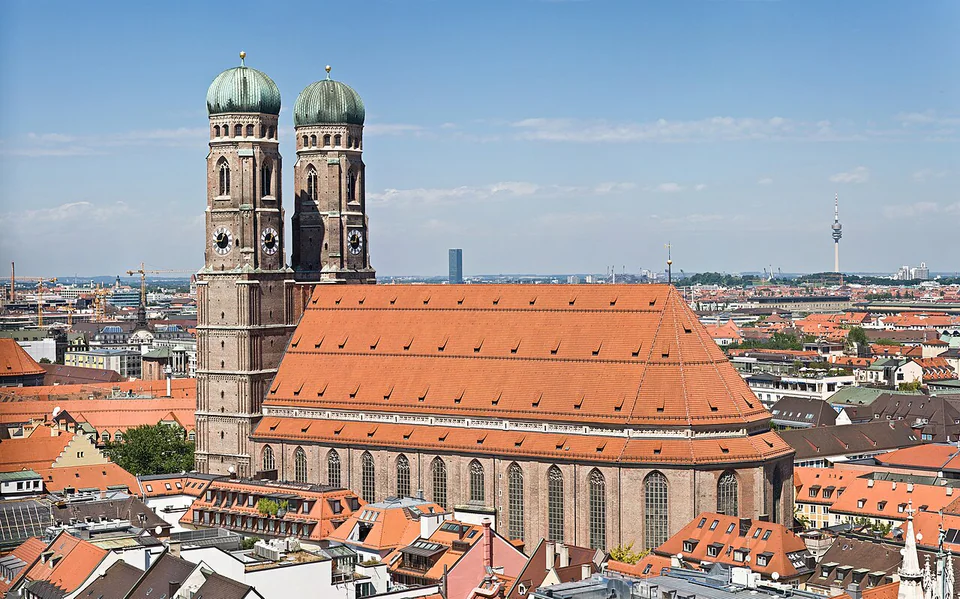
The neo-Gothic City Hall on Marienplatz was built between 1867 and 1908, and the figures of its Glockenspiel dance in the tower every day at 11 am and noon, and from March to October also at 5 pm. A couple of blocks away rise the almost 99-metre twin towers of the Frauenkirche. Climb the tower of St Peter's Church, Alter Peter, for the best view over the rooftops.
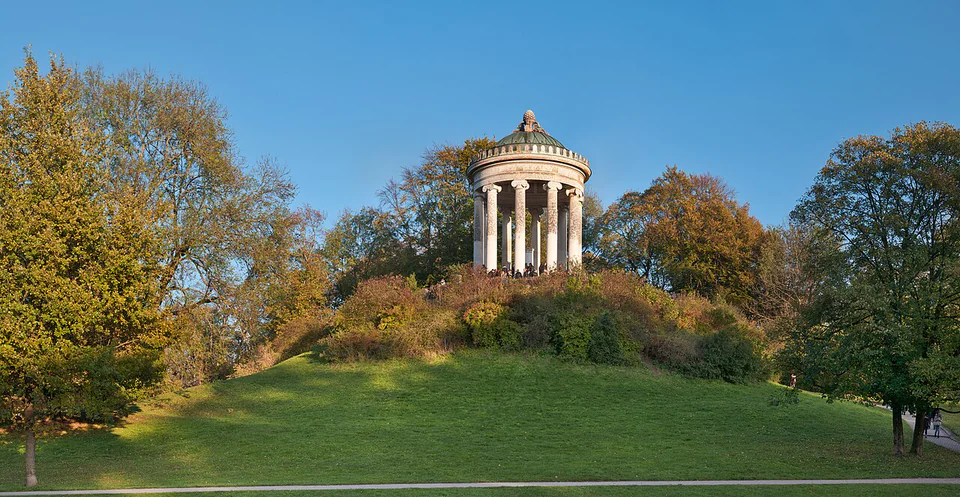
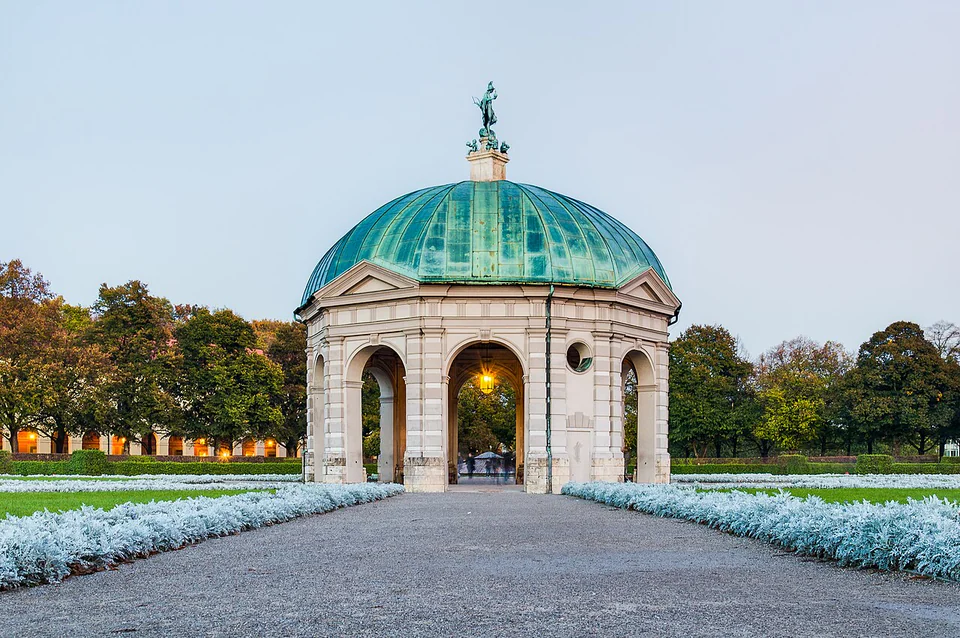
The huge park stretches from the centre far to the north and is larger than New York's Central Park. It has meadows, streams, the small Greek-style Monopteros temple on a hill and one of the city's biggest beer gardens at the Chinese Tower. At the park's southern edge, surfers ride a standing wave on the Eisbach stream, when the wave is there and surfing is allowed.
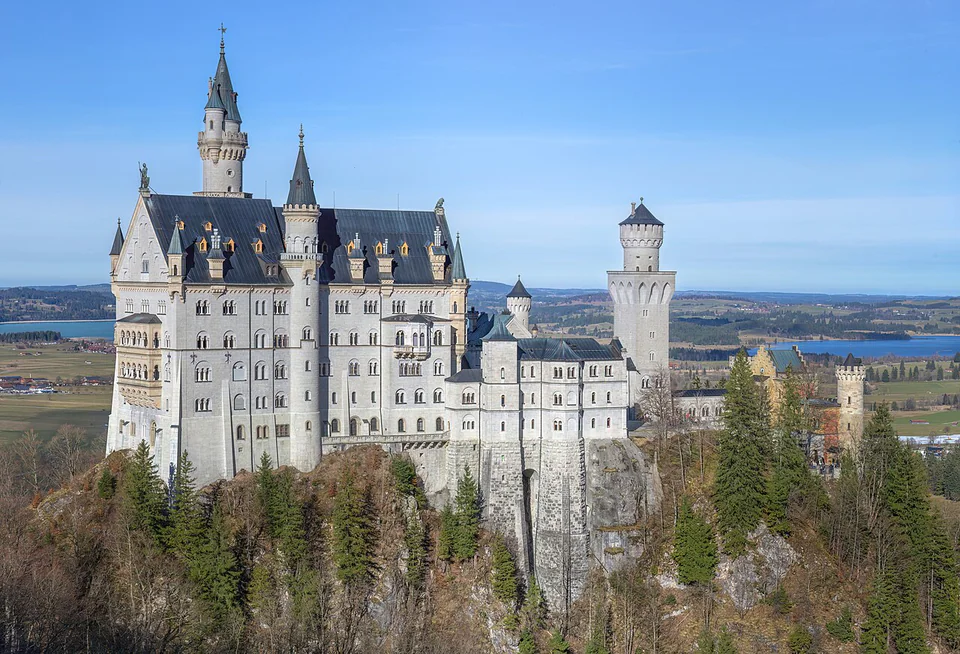
King Ludwig II began building his fairy-tale castle on a crag in the Allgäu in 1869, but it was unfinished when he died in 1886. By train to Füssen and then bus, the trip from Munich takes about two hours. The castle can only be seen on timed guided tours, so buy tickets in advance, and walk out onto the Marienbrücke bridge for the classic view. Neuschwanstein day trips
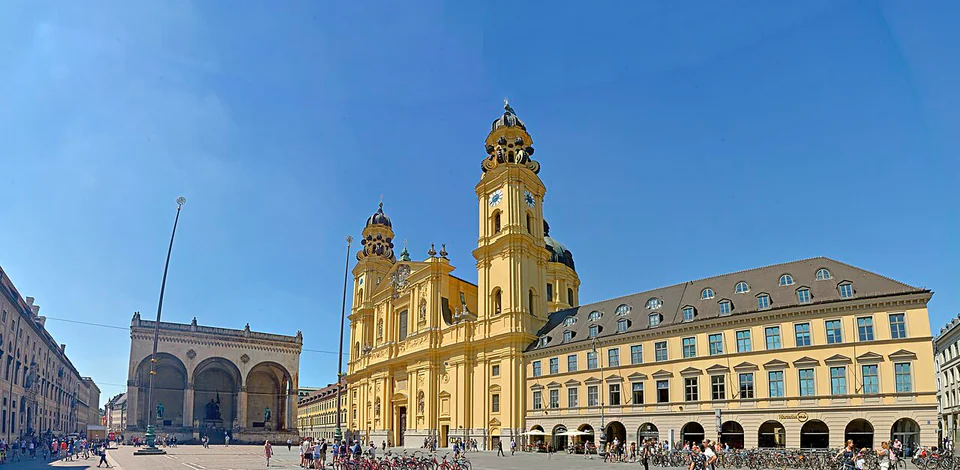
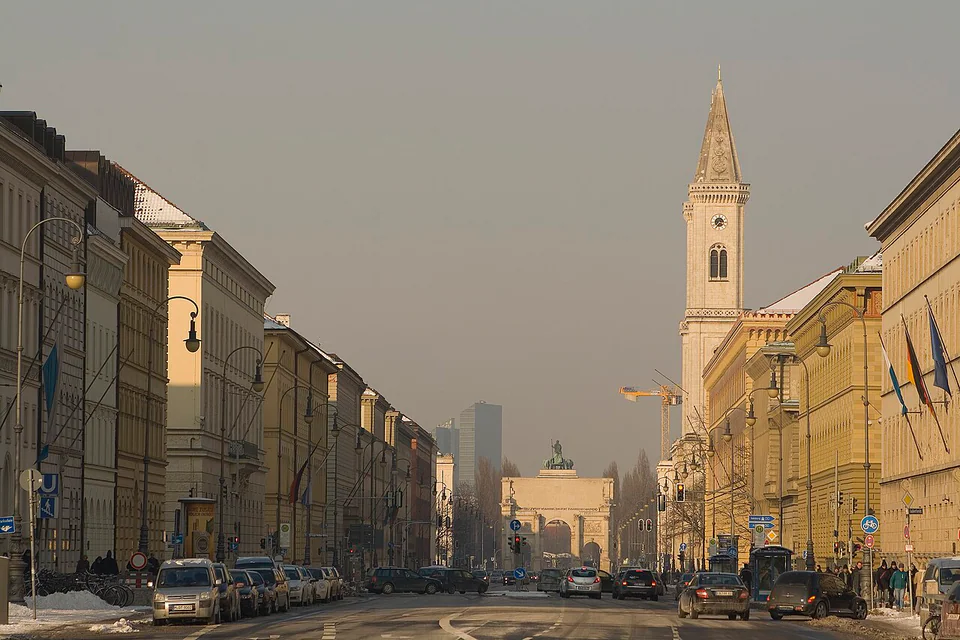
The Altstadt, the Old Town, fits inside the former city walls, with Marienplatz, the Residenz and the pedestrian streets. To the north, the grand Ludwigstraße leads to the Siegestor victory gate. Along it lies Maxvorstadt, with the university and the art museums of the Kunstareal, and beyond the Siegestor begins Schwabing, a former artists' quarter with cafés and Art Nouveau houses near the Englischer Garten. The Glockenbachviertel and Gärtnerplatz south of the centre are the liveliest areas for restaurants and bars. Haidhausen, east of the Isar, has old lanes and small squares, and the Westend lies by the Theresienwiese.
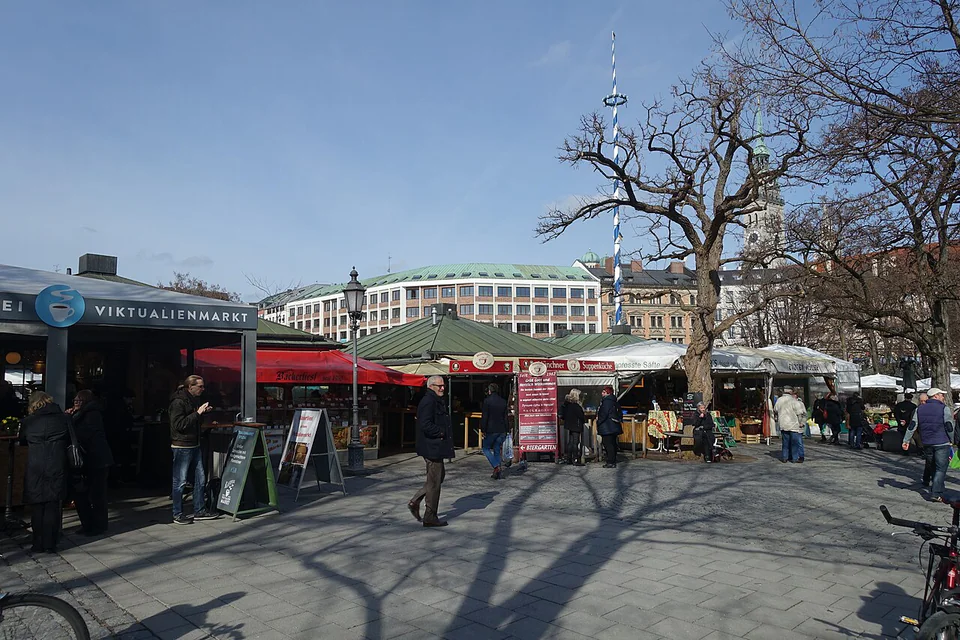
The Viktualienmarkt has been in the heart of the Old Town since 1807, with around a hundred stalls for fruit, cheese, sausages and delicacies and a beer garden where the city's big breweries take turns to pour. Try white veal sausage, Weißwurst, with sweet mustard and a pretzel, traditionally before noon, and roast pork knuckle, Schweinshaxe, at a tavern. Obatzda is a spicy cheese spread that goes well with beer. The Hofbräuhaus, founded as the court brewery in 1589, is the best-known beer hall, but Augustiner, Paulaner and the other big breweries have their own beer halls and gardens around the city. Munich also has several restaurants with Michelin stars.
FC Bayern Munich is Germany's most successful football club, and for many a match at the Allianz Arena, which holds 75,000 spectators, is a reason to come. Tickets often sell out quickly, so buy them through the club's official website and not from touts. The city's other traditional club, TSV 1860 Munich, plays at the old Grünwalder Stadion in Giesing.
The Olympic Park is home to the SAP Garden, which opened in 2024 and is the home arena of the ice hockey team EHC Red Bull München and FC Bayern's basketball team. In the same park you can run around the lake or swim in the Olympic swimming hall. In winter you can go skiing in the Alps on a day trip. FC Bayern tours and experiences
The Old Town is easy to explore on foot. The metro (U-Bahn), suburban trains (S-Bahn), trams and buses all use the same MVV tickets. Zone M covers the whole city, and a day ticket is valid until 6 am the next morning and pays off after just a couple of journeys. Buy tickets in the MVGO app or from machines, and validate paper tickets before boarding. The Deutschlandticket, a monthly subscription for local transport throughout Germany, is also valid. MVG Rad has rental bikes all over the city.
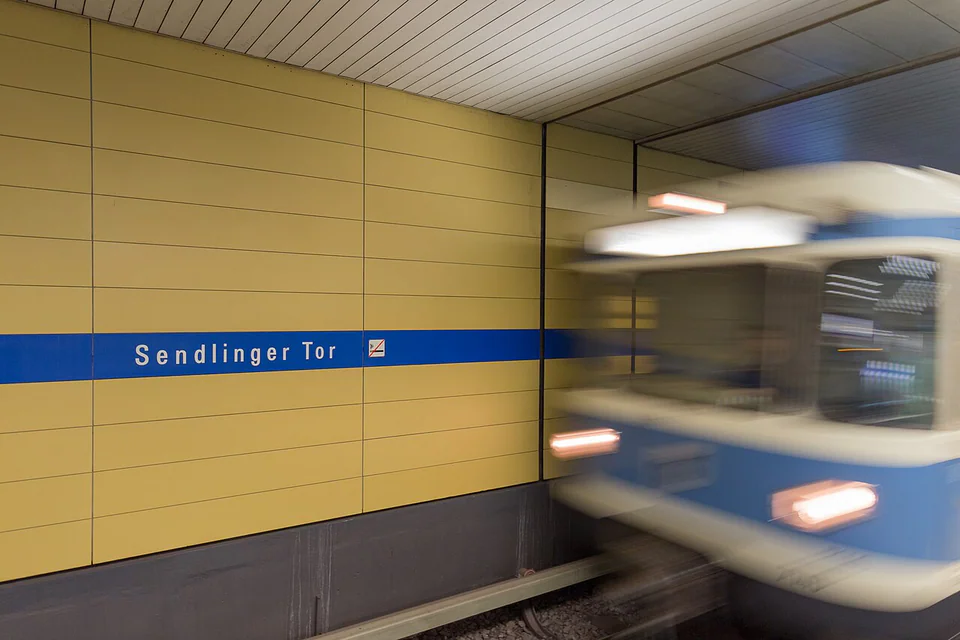
In the MVGO app from the city's transport company you buy tickets and see departures for the metro, trams, buses and suburban trains, and it also unlocks the MVG Rad rental bikes. DB Navigator from Deutsche Bahn sells train tickets, for example to Füssen and Neuschwanstein or further around Germany. Uber is available if you need a ride.

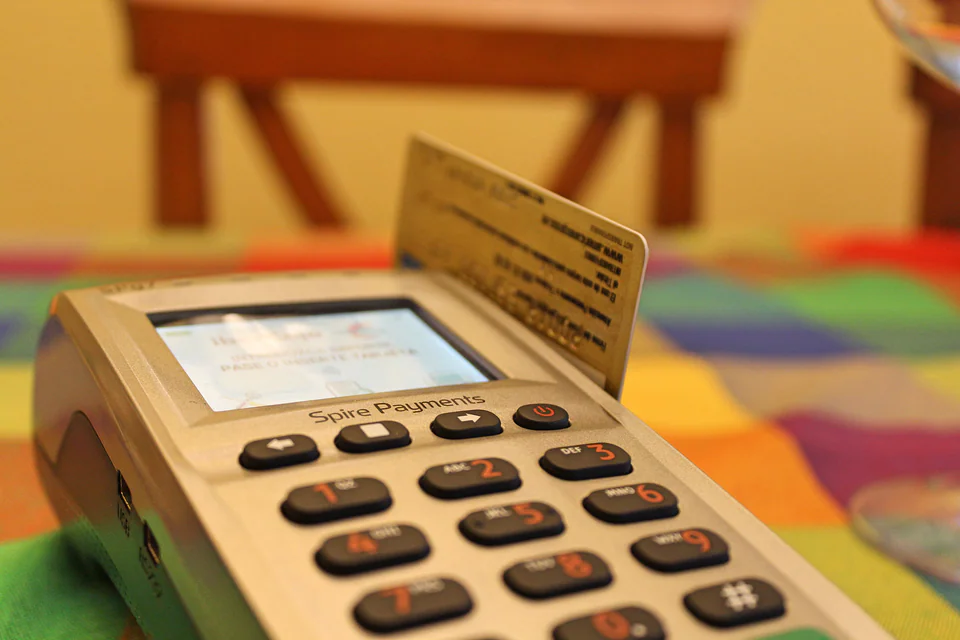
Germany uses the euro. Cards work in most places, but cash is still common, so keep some euros for bakeries, market stalls and smaller taverns. Most shops are closed on Sundays, except at the stations and the airport. In restaurants it's usual to round up or add 5–10 per cent, and you say the total when you pay. Bottles and cans carry a deposit. EU roaming rules apply, and the tap water is good to drink.
Much of Munich is free: the Englischer Garten, the Glockenspiel on Marienplatz, the Asamkirche and BMW Welt. On Sundays, entry is just one euro at several state museums, including the Pinakotheken. Entry to the Oktoberfest grounds is free, but book accommodation early and arrive at the tents in the morning on a weekday if you want a seat without a table reservation. The Christmas markets open in late November. Set aside a full day for Neuschwanstein, and half a day for the Dachau Memorial Site.