Hiking below the Matterhorn
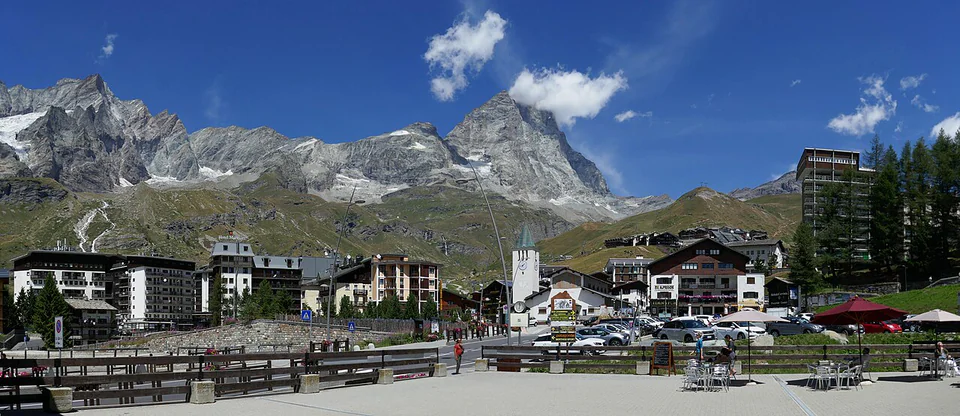
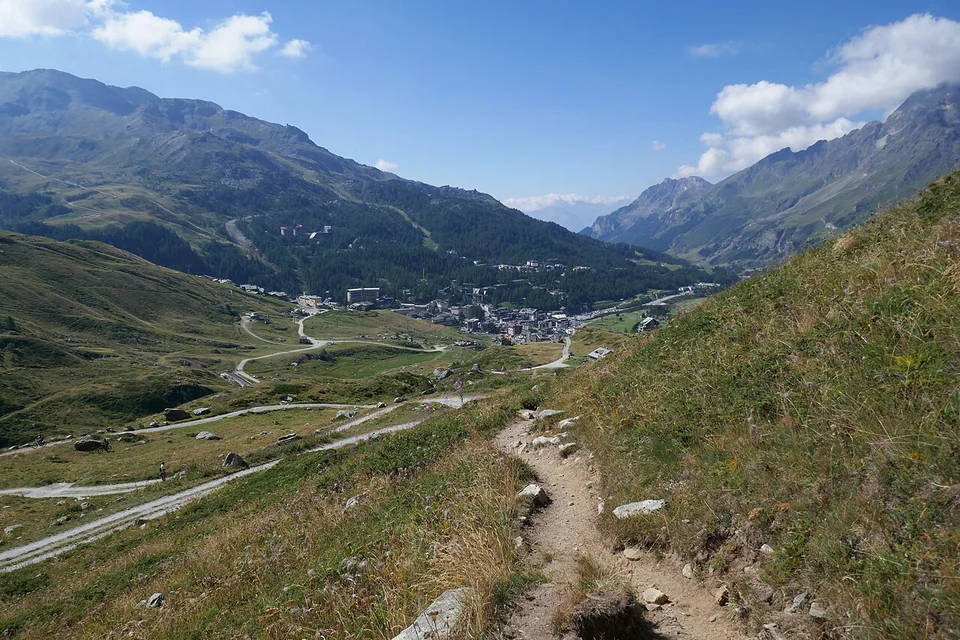
In summer, paths lead from the village up towards Plan Maison, Lago Goillet and the Rifugio Duca degli Abruzzi hut at Oriondé, with the Matterhorn straight ahead the whole way. The lifts make it easy to start high up.
Your guide to Cervinia
Breuil-Cervinia lies 2,050 metres above sea level, at the head of the Valtournenche valley in the Aosta Valley, Italy's smallest region. Above the village rises the Matterhorn, or Monte Cervino as the mountain is called in Italian, at 4,478 metres. From the Italian side the mountain looks different from the postcards of Zermatt – broader and more angular, but every bit as powerful.
For a long time Breuil consisted of just a few summer farms and a couple of inns for mountaineers. In the 1930s it was developed into a ski resort and given the name Cervinia. The first cable car opened in 1936. Today Cervinia is linked to Zermatt's ski area on the other side of the border. Together the resorts offer around 360 kilometres of pistes, and it's easy to ski over to Switzerland and back in a day.
Thanks to its high altitude, Cervinia has one of the longest ski seasons in the Alps. The lifts usually open in late October and stay open until early May. In summer there is often a chance to ski on the glacier at Plateau Rosa too.
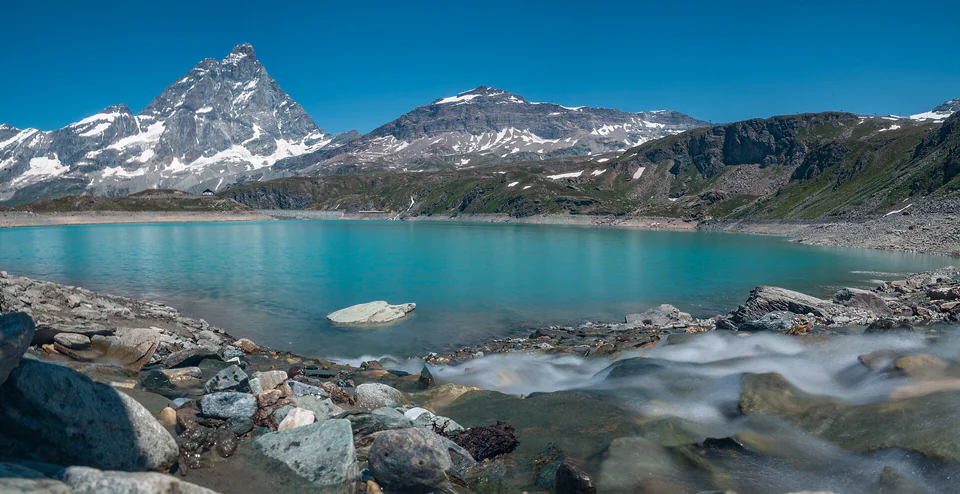
When the snow melts, the valley turns into a paradise for hikers. Mountain lakes such as Lago Blu, where the Matterhorn is reflected in the water, await, along with trails winding up towards the mountain huts below the peak. Since 2023 you can also take the cable car all the way across the border to Zermatt, on a spectacular ride past the glaciers below the Klein Matterhorn.
Things to do
In summer, paths lead from the village up towards Plan Maison, Lago Goillet and the Rifugio Duca degli Abruzzi hut at Oriondé, with the Matterhorn straight ahead the whole way. The lifts make it easy to start high up.
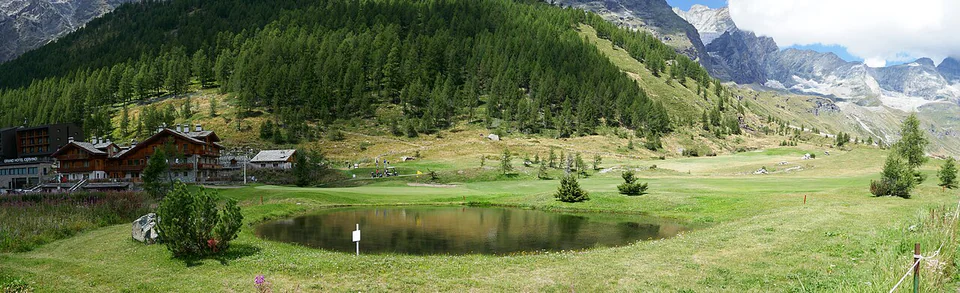
The Golf Club del Cervino opened in 1955 and is one of the highest golf courses in Europe, now with 18 holes. The course is open during the short summer, and the Matterhorn view comes with every hole.
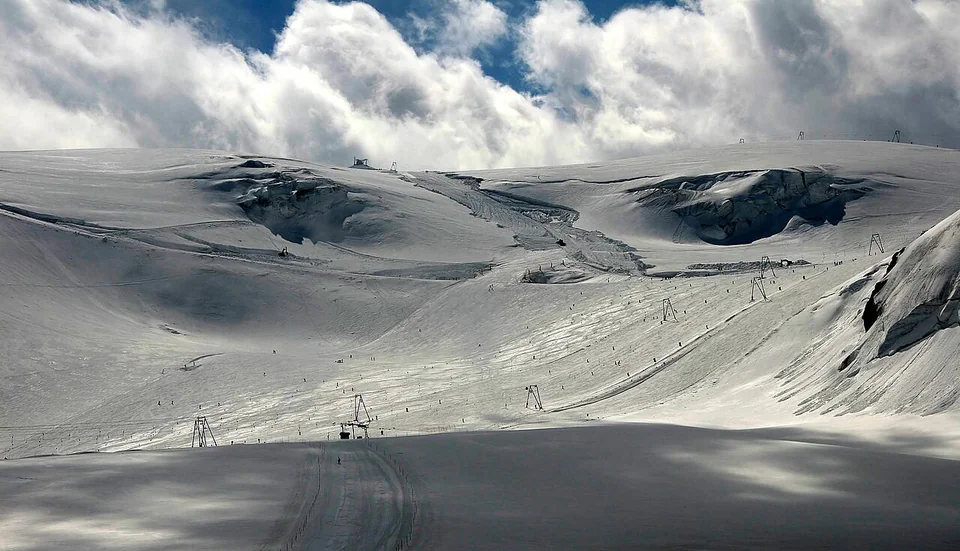
Up at Plateau Rosa you can usually ski on the glacier even in summer. The slopes open early in the morning and close around lunchtime, when the snow gets soft, and the season depends on snow conditions.
Pack right
Best December–April and July–August
−11–17 °CLong, cold, snowy winters and short, cool summers. Up at Plateau Rosa it's much colder and windier than in the village, and the wind sometimes closes the highest lifts.
Current currency
Euro
1 EUR to SEKThe rate is updated every hour. Always check the current rate before you travel.
Compare hotels and apartments on the map, with current prices.
The map loads from Stay22 only when you click. Stay22 may then set cookies and collect information about your browser. Privacy
Plan your trip
The nearest airport is Turin (TRN), about an hour and 45 minutes away by car. Milan Malpensa (MXP) is just over two hours away and Geneva (GVA) around three hours.
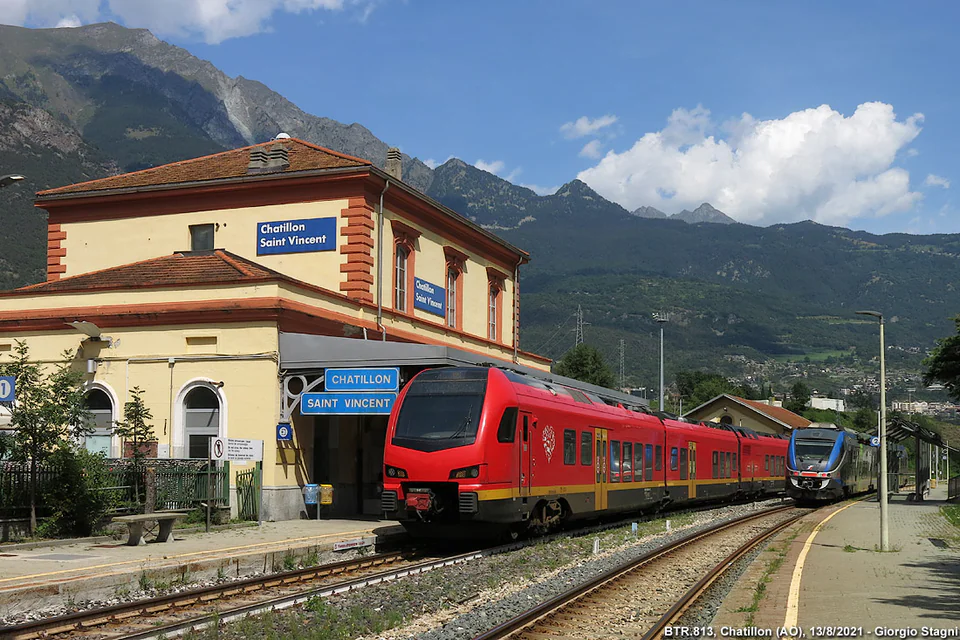
By train, travel to Châtillon-Saint-Vincent on the line between Turin and Aosta. From there, buses cover the last 27 kilometres up the valley to Cervinia, a journey of about an hour. The road up is steep and winding, so allow more time after snowfall.
Check current departures and prices before you travel.

Cervinia has hotels in every price range and plenty of apartments, many close to the lifts so you can ski from the door. Valtournenche, further down the valley, is often cheaper and has its own lifts into the ski area.
Book well ahead for Christmas, New Year, February and Easter. Many hotels close between seasons, for a few weeks in early summer and autumn.
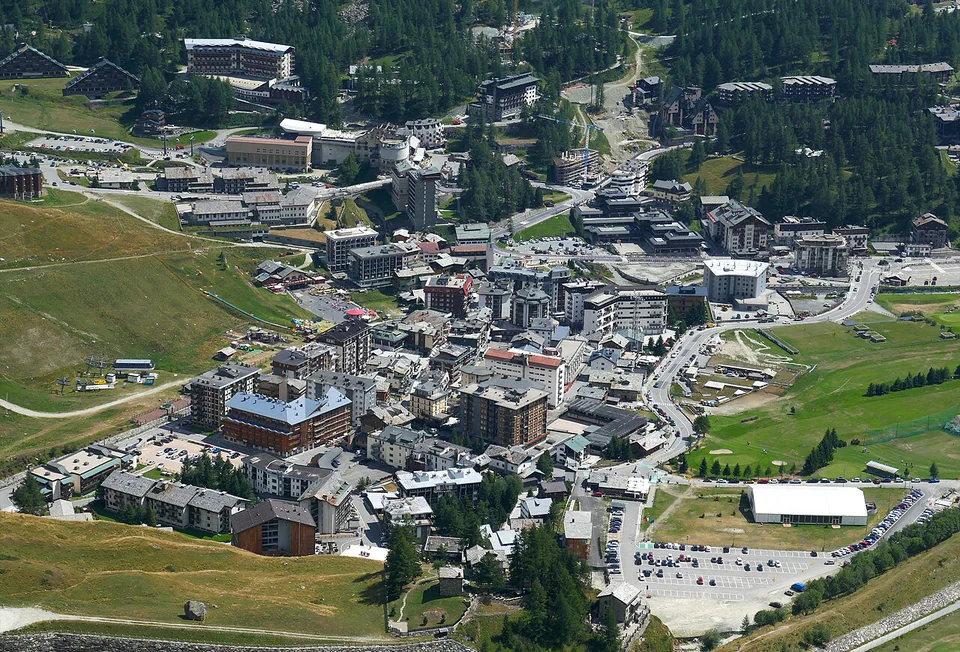
The big and the small
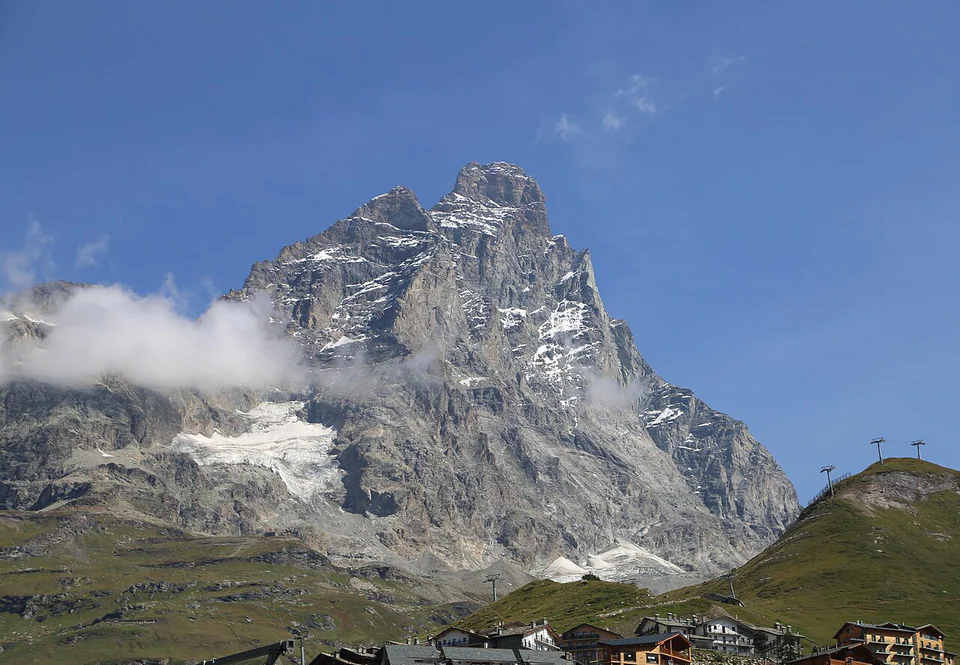
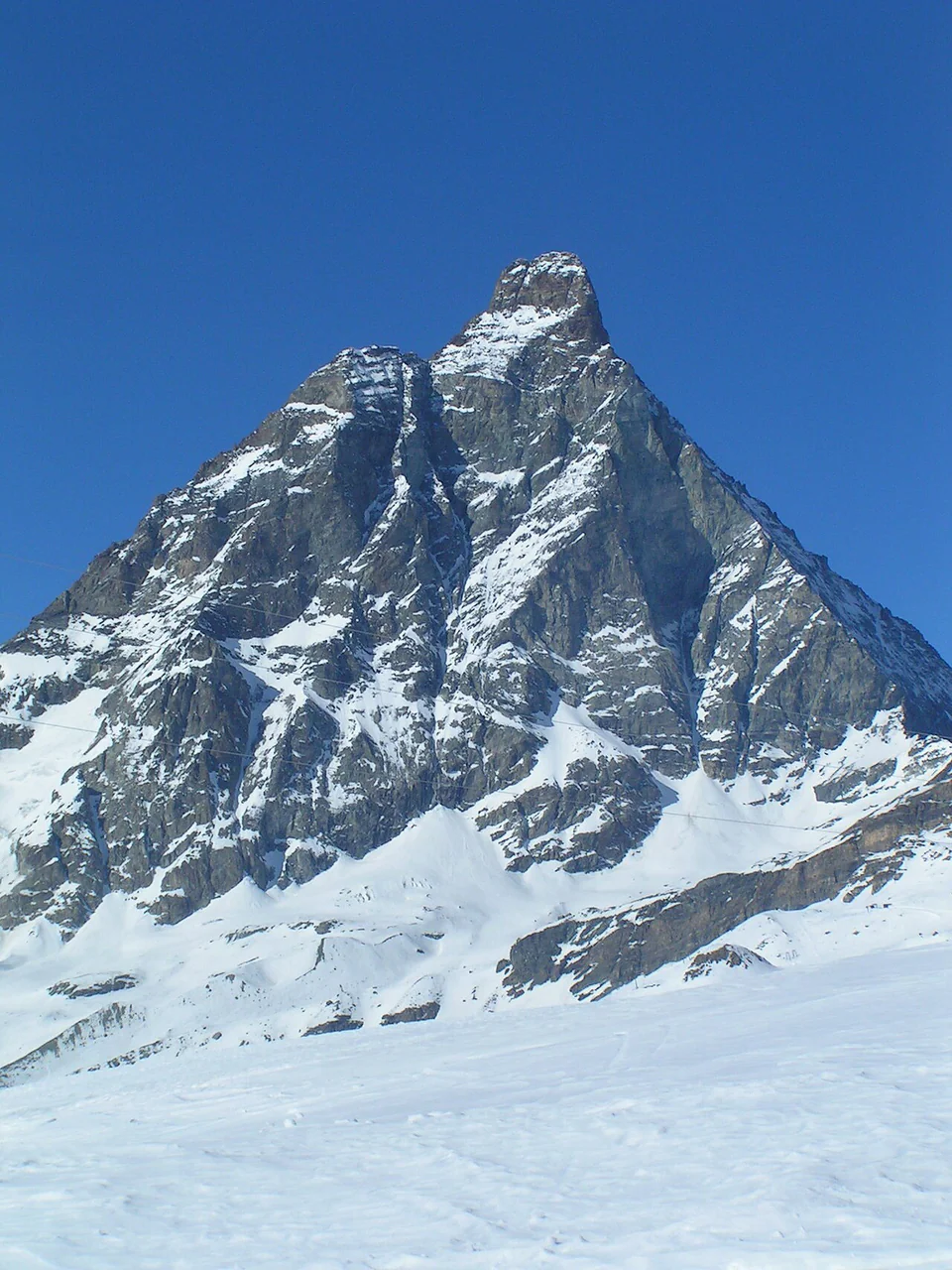
Monte Cervino, as Italians call the mountain, is 4,478 metres high and stands on the border between Italy and Switzerland. The Italian route follows the Lion Ridge and was first climbed in July 1865 by Jean-Antoine Carrel of Valtournenche and Jean-Baptiste Bich, just three days after Edward Whymper's first ascent from Zermatt. The summit is only for experienced mountaineers with a guide, but the mountain can be seen from almost anywhere in the village.
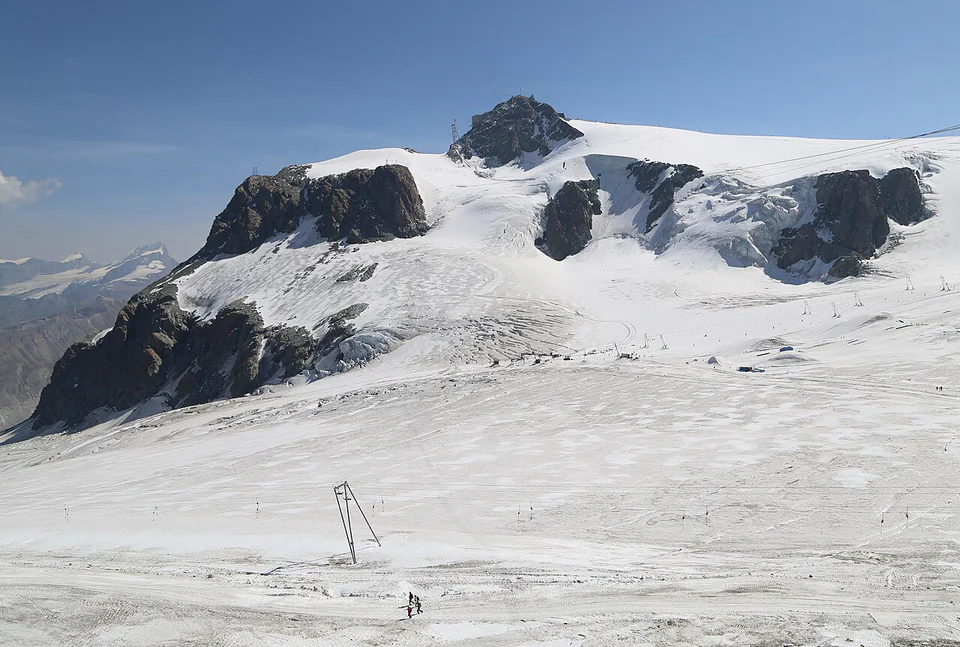
The cable cars from Cervinia end at the Plateau Rosa glacier plateau, where the Testa Grigia summit, at almost 3,500 metres, sits right on the Swiss border. From here you see the Matterhorn side-on and Monte Rosa to the east. In winter the runs to both Cervinia and Zermatt start here, and the thin air means you should take it easy.
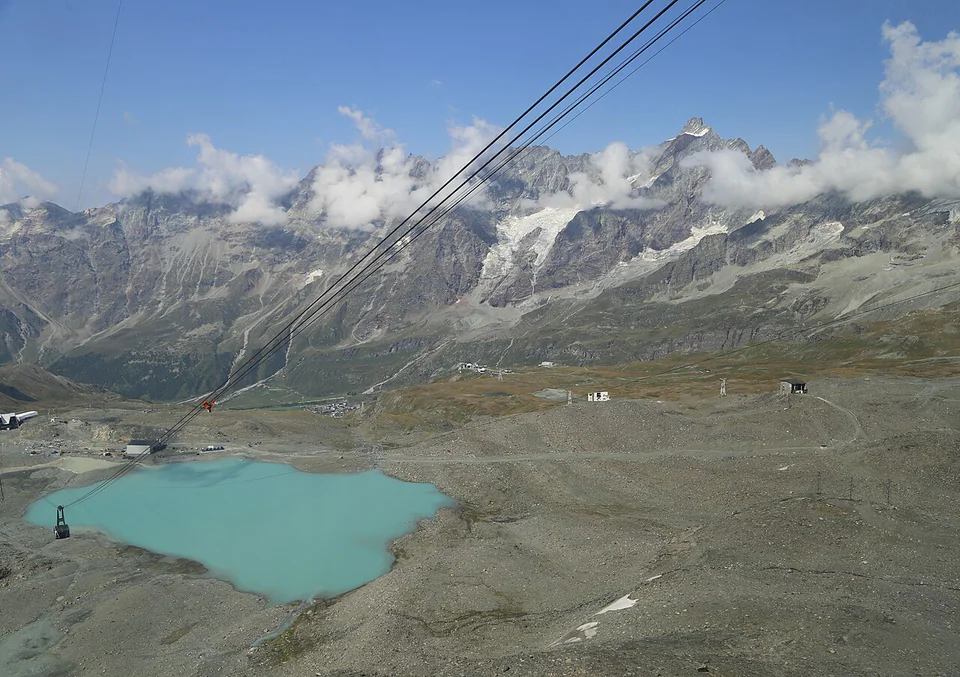
The turquoise reservoir at just over 2,500 metres lies just below Plan Maison, the mid-station on the way up to the glacier. In summer the Matterhorn is reflected in the water, and an easy walk from the cable car takes you around the lake. The view from the cable car above is worth the trip too.
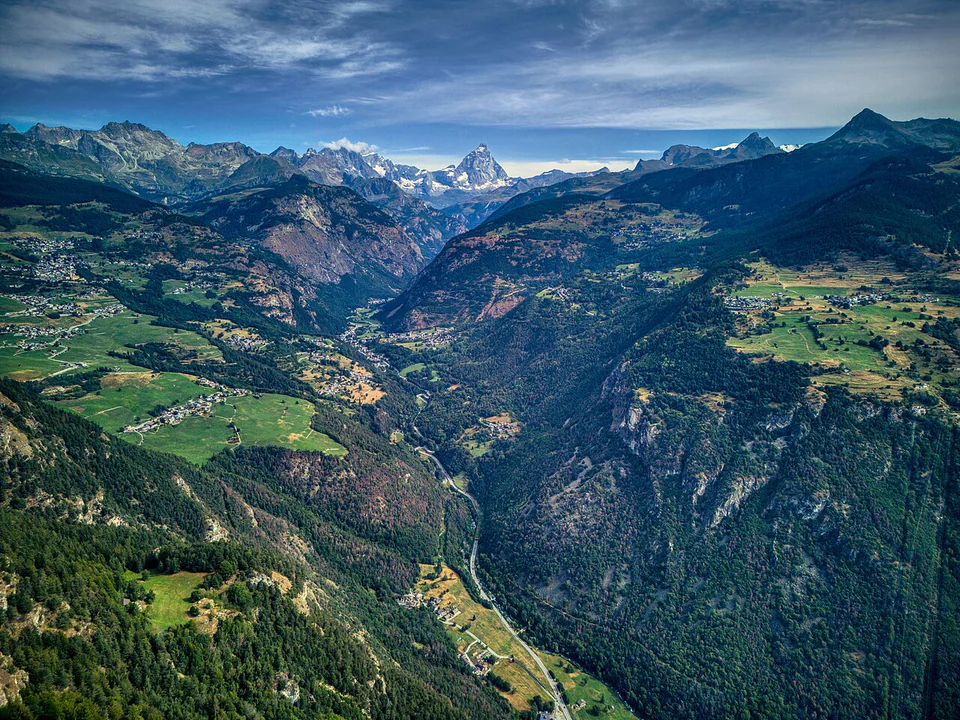
The village further down the valley is older and quieter than Cervinia, with stone houses and a long tradition of mountain guides. Jean-Antoine Carrel, who led the first ascent of the Matterhorn from the Italian side, came from here. Valtournenche has its own lifts, linked to the ski area up at Cervinia.
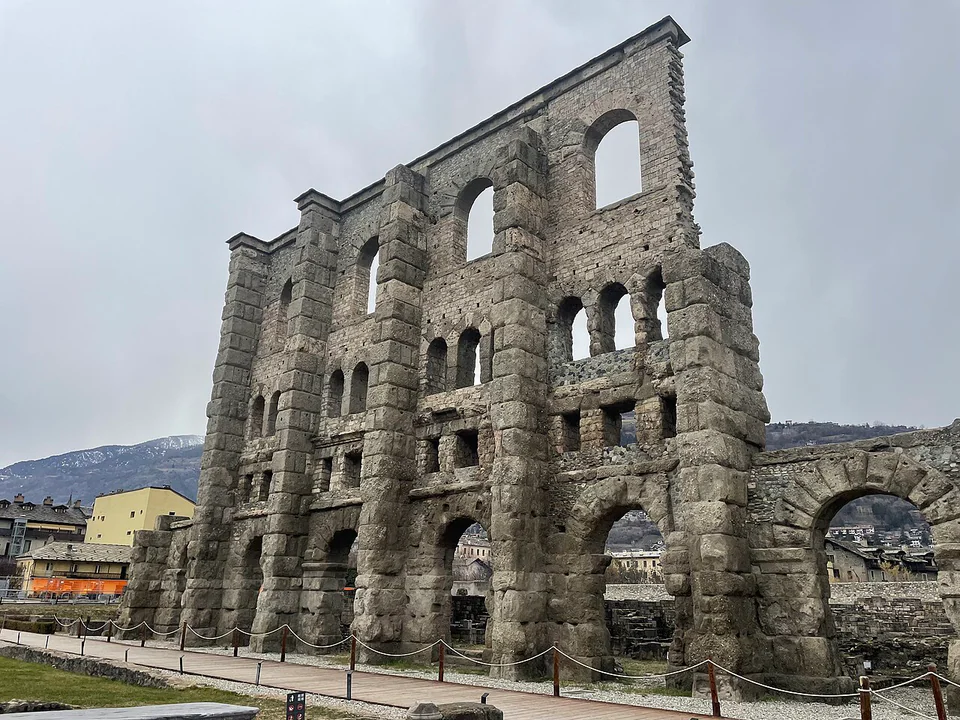
The regional capital, about an hour away by car, was founded by the Romans and is sometimes called the "Rome of the Alps". Here you'll find the Arch of Augustus, the Porta Praetoria city gate and the façade of the Roman theatre, and the old streets have cafés and shops selling cheese and sausage from the valley. A good outing on a day of bad weather in the mountains. Aosta tours
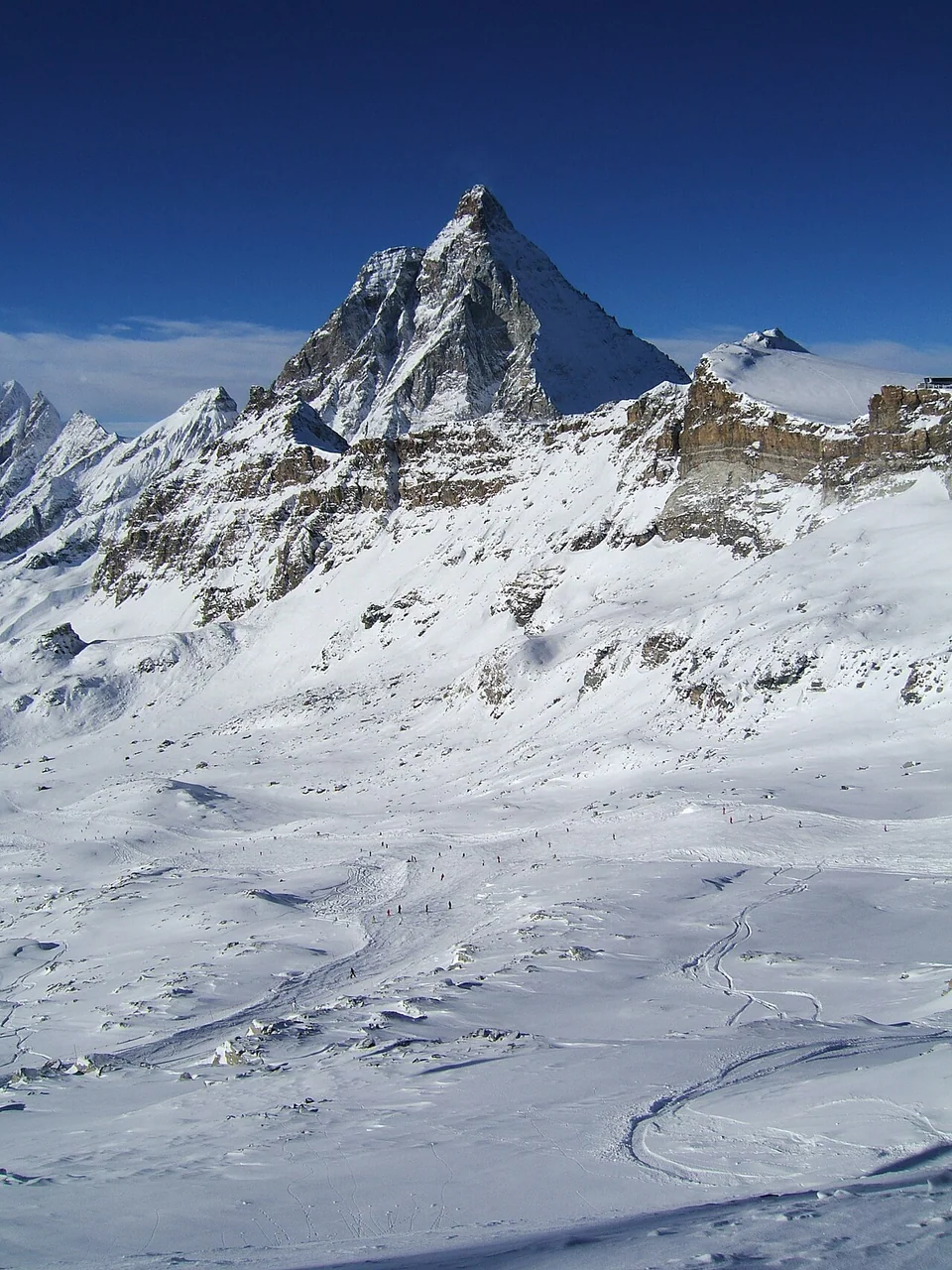
From Plateau Rosa, at over 3,400 metres, you ski straight into Switzerland and down towards Zermatt, then back to Italy the same day. The runs on the Italian side are long and wide, and from the Klein Matterhorn down to Cervinia it's around 13 kilometres. You need the international ski pass, and keep an eye on the wind and weather: the border lifts sometimes close at short notice.
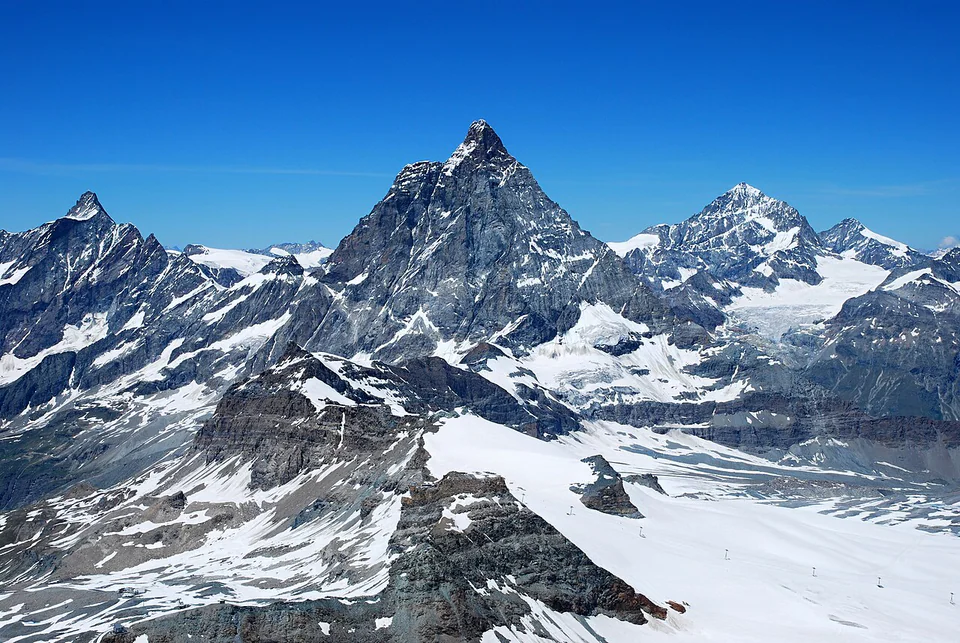
Since July 2023 you can ride cable cars all the way between Cervinia and Zermatt. The journey goes via Testa Grigia and up to the Klein Matterhorn at almost 3,900 metres, with views of the Matterhorn, Monte Rosa and the glaciers, and takes about one and a half to two hours. Bring a passport or ID card, as you cross the border. Matterhorn Glacier Paradise tickets
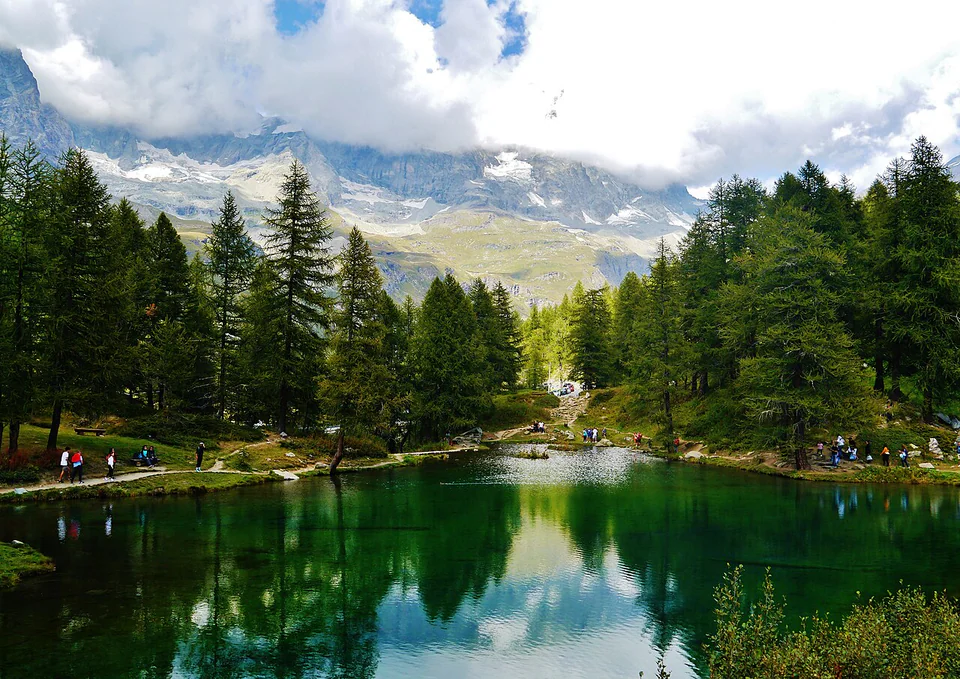
The small lake just below Cervinia, at almost 2,000 metres, is surrounded by larches and has clear blue-green water. On a still morning the Matterhorn is reflected in its surface, one of the most photographed views in the valley. It's a short walk from the village, and a path runs around the lake.
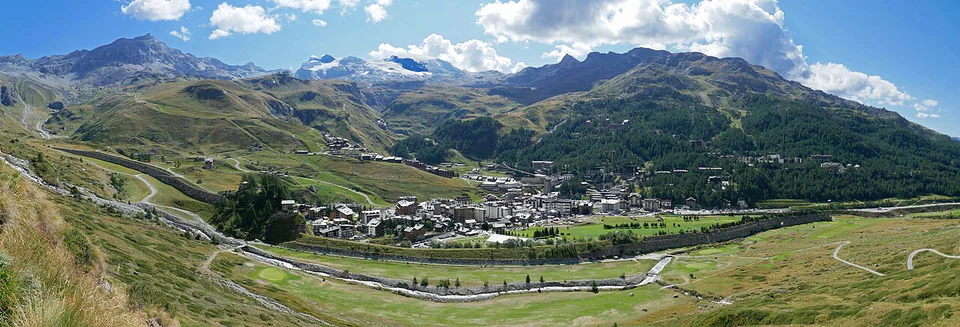
Breuil-Cervinia sits at the top of the valley, with the lifts to Plateau Rosa and Zermatt. Valtournenche, just under ten kilometres further down, is an older village with its own lifts and often lower prices. At Buisson in Antey-Saint-André the cable car goes up to the car-free village of Chamois, and at the bottom, where the valley meets the main Aosta Valley, is Châtillon with the railway station.
Aosta Valley food is hearty mountain fare. Try fonduta, melted fontina cheese with egg yolk, polenta concia with butter and cheese, and mocetta, air-dried meat. After dinner you may be offered coffee with grappa and genepì in the coppa dell'amicizia, the wooden friendship cup with several spouts that goes round the table. There are plenty of mountain restaurants on the slopes, and if you ski over to Zermatt, lunch is more expensive and often paid in Swiss francs.
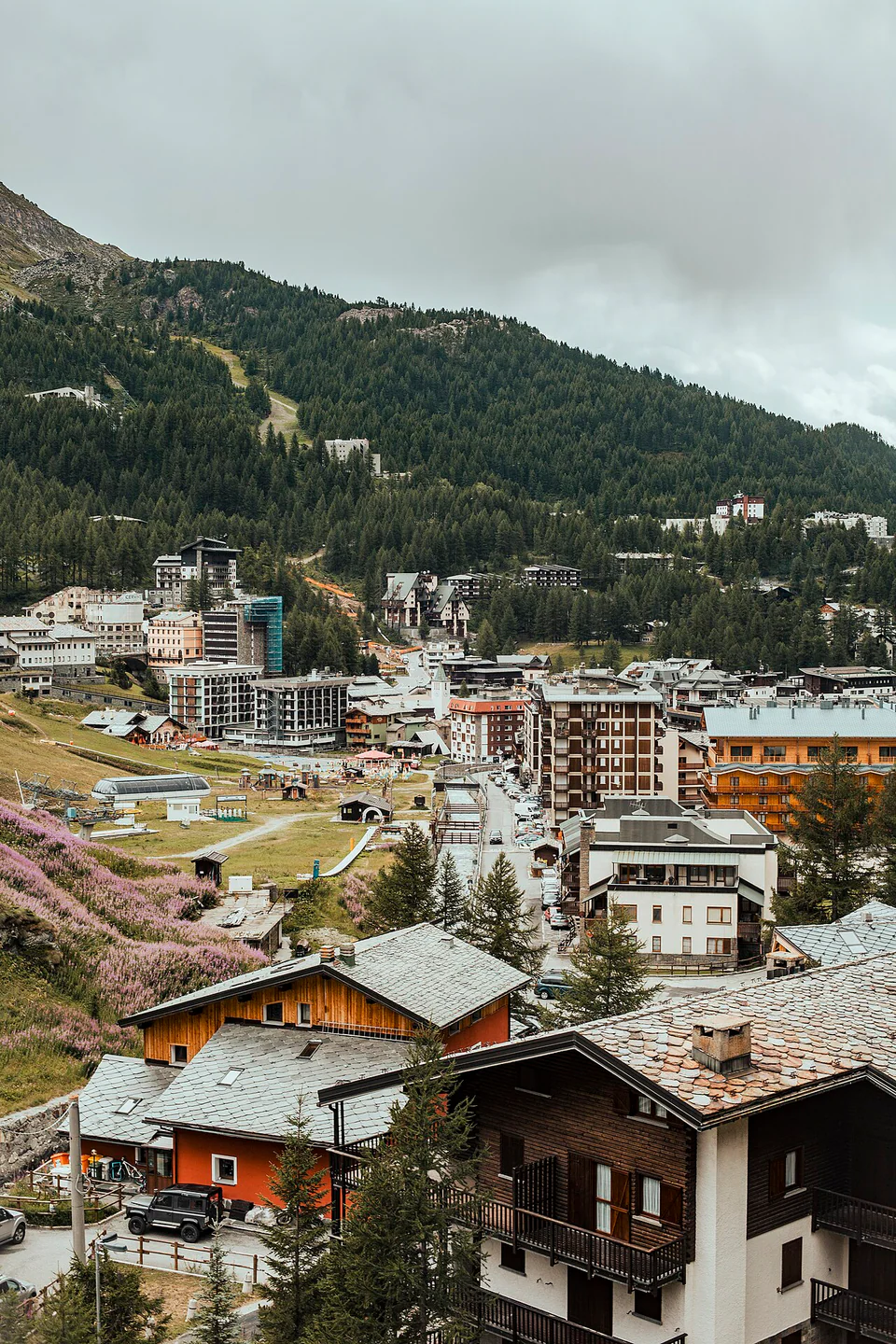
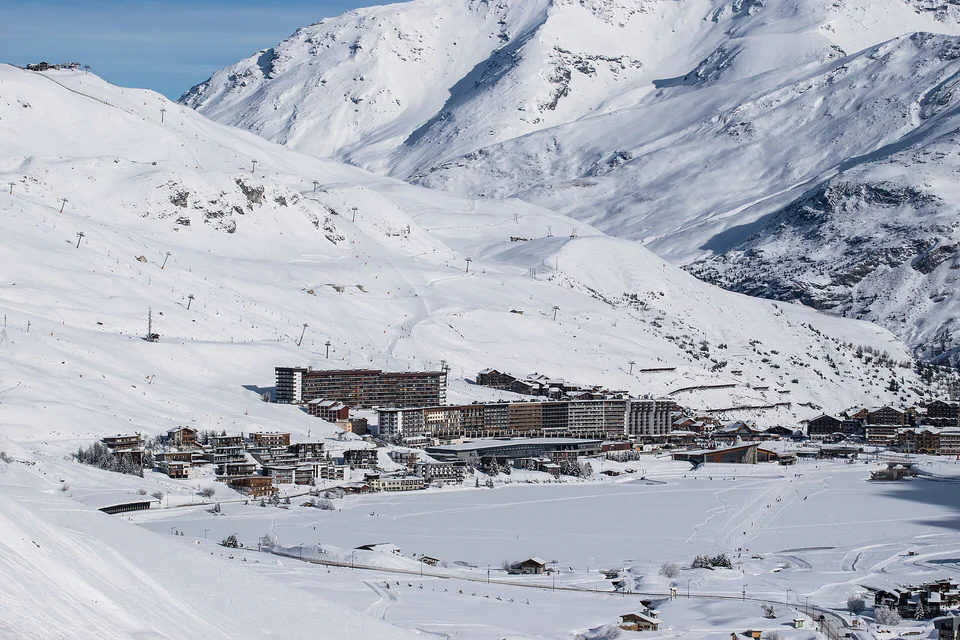
From the village, cable cars take you via Plan Maison and Cime Bianche up to Plateau Rosa. Cervinia and Valtournenche together have around 160 kilometres of pistes, and with Zermatt it's around 360. The runs on the Italian side are often long and wide, good for skiers who want plenty of mileage without it getting too steep. The local ski pass covers Cervinia and Valtournenche; for Zermatt you need the international one.
The season usually runs from late October to early May, and the Valtournenche lifts open later. The wind sometimes closes the highest lifts, so check conditions before heading for Zermatt, and make sure you get back before the border lifts close.
In Cervinia you walk everywhere, and the lifts start from the village. Buses run down the valley to Valtournenche, Buisson and Châtillon. A car isn't needed for a ski trip but is handy for outings to Aosta and the small villages in the valley. Winter tyres or snow chains are required in the winter months, and the road up to Cervinia can be slow after snowfall.
The lift company's website, cervinia.it, shows which lifts and pistes are open, including the border lifts to Zermatt. Download a weather app with mountain forecasts, as wind and cloud decide whether the highest lifts run. A map app with offline hiking trails is handy in summer.

The currency is the euro, but in Zermatt you pay in Swiss francs; cards work on both sides. Switzerland isn't covered by EU roaming rules, so check your mobile plan before crossing the border. Bring a passport or ID card. In Italy, helmets have been compulsory for everyone on the pistes since the 2025/26 season, and you must have third-party liability insurance that covers skiing. At 3,500 metres the air is thin, so take it easy on the first day. The Aosta Valley is bilingual, and many place names are French.
Choose your season by what you want to do: skiing from late October to early May, hiking and golf in July and August. Early and late season are often quieter and cheaper, but parts of the area may be closed. The sun is strong at altitude, so bring sunscreen and sunglasses. If the wind closes the border lifts, getting back from Zermatt means a long and expensive trip around the mountains, so don't cross too late in the day.